

THE PATIENT HAS LEFT THE WAITING ROOM: INSIDE PHARMA’S BIGGEST SHIFT IN DECADES
By Yeal Lavon, Director, Social Excellence Social Strategy
After attending the Snapchat Health Summit, one idea framed nearly every session: health decisions no longer happen in a single clinical moment. They unfold continuously, in social feeds, group chats, through creator content, and increasingly, conversations with LLMs (Large Language Machines).
Publicis Health’s Global CEO, Matt McNally, called it plainly: this is the biggest structural shift in pharma marketing in decades. Here's what's new and why it matters.
Three Things Changed:
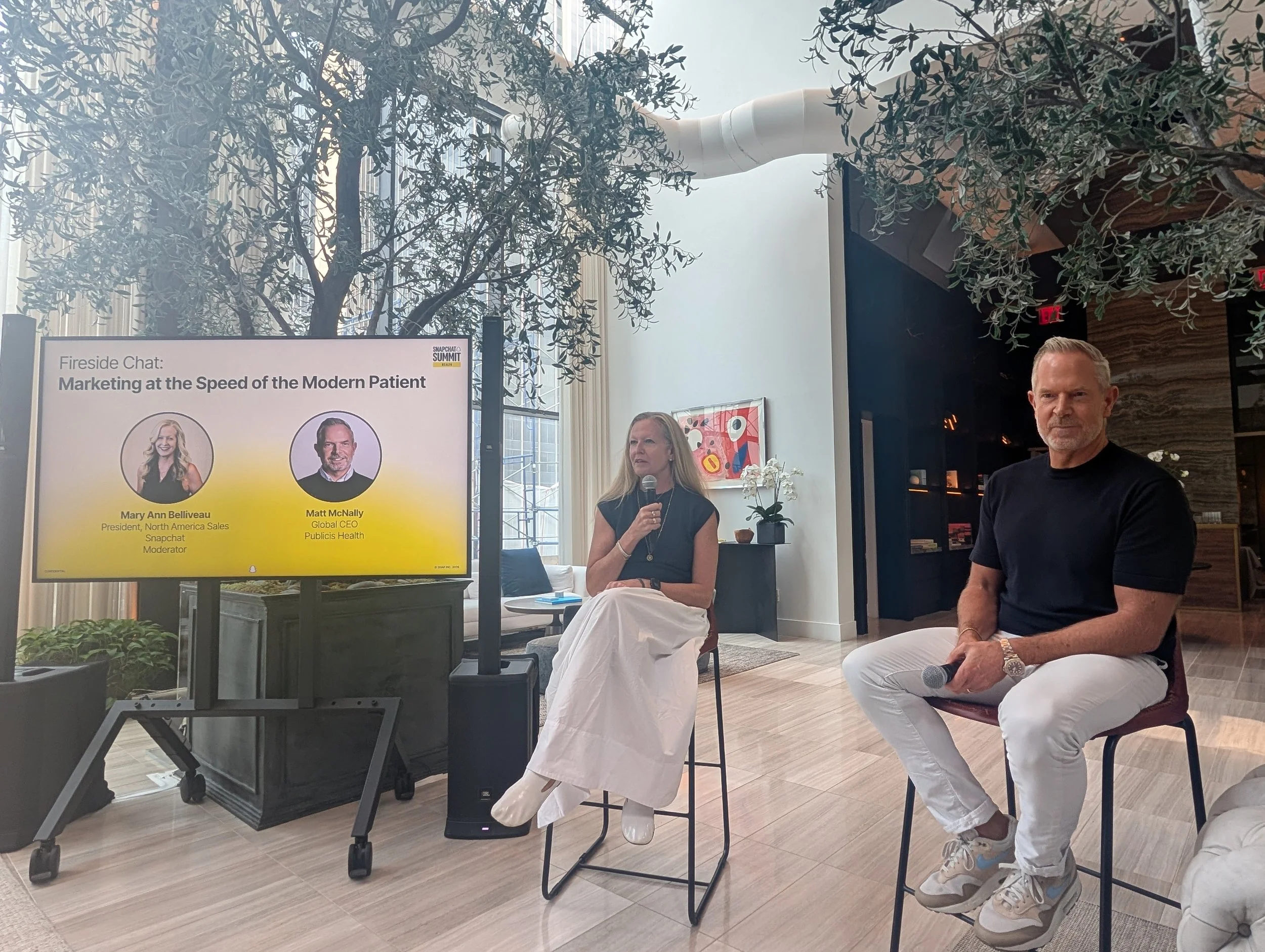
1. Private is outpacing public. For years, "social strategy" has meant a public feed: posts, comments, and visible engagement. That's no longer the only place that trust gets built. Private chat and DMs are emerging as more decision-relevant than public feed for health conversations. Patients are validating choices with friends and family in threads no brand can see directly. Snap's own data backs this up: 85% of Snapchatters use Chat regularly, and those conversations are converting into real clinical action: 37% of Snapchatters discuss branded health content with a doctor or caregiver, 1.5x more likely than non-Snapchatters. Channel mix can't just be about where we post anymore. It must account for how content travels once it leaves the feed, including how it shows up inside chat apps themselves, not just alongside them.
It's also worth updating who we picture on the other end of that chat. More than 60% of Snapchat's 110M U.S. users are 25+, and 1 in 3 are 35+, now the platform's fastest-growing cohort, and an increasingly important audience for household health decisions. This isn't a teen platform brands are borrowing relevance from; it's where a meaningful share of the adults who are making health decisions for their households already are.
2. Measurement is catching up to behavior. Impressions and site visits describe what already happened. The Summit's clear consensus: the industry is moving toward predictive, leading indicators that anticipate patient behavior before it happens. This is exactly where GEO and AI-citation tracking come in. As we build these into 2027 planning frameworks, we're not adding a nice-to-have metric, we're building the measurement model the rest of the industry is racing toward.
3. Adherence, not just acquisition, is the job now. With most current pharma launches addressing chronic conditions, marketing's job doesn't end at first prescription, it extends across years of ongoing patient behavior. That reframes team structure, too: it's a strong case for integrated, cross-functional teams over the siloed HCP/DTC model many organizations still run on.
The Proof Point: Wegovy's Big Game Moment
Novo Nordisk’s Director of Paid & Earned Media, Tara Sparks, shared what happens when this thinking is executed well. A culture-led, surround-sound launch including a hero spot launched in prime time, creator and talent partnerships, and dozens of platform-specific cutdowns, with MLR embedded on set for real-time compliance- drove a 15-20% lift in search demand and the most trafficked week in the brand's site history. It's a clear ROI case yet for the omnichannel model we should advocate for.
What's Coming on the Platform Side
A few Snap capabilities worth watching out for:
Chat feed placements are driving a 47% lift in brand awareness and 33% higher action intent than non-chat placements.
Multi-CTA units, supporting up to three disclaimer CTAs, offer a real solution to fair-balance formatting constraints pharma marketers navigate constantly.
A Snap Creator Network, entering closed beta soon, could meaningfully streamline creator sourcing and campaign activation on the platform.
The Bottom Line
The through-line across every session was consistent: patients are proactive, social, and constantly researching, with or without brands in the room. The organizations that win are the ones showing up authentically in the private, trusted spaces where decisions get made, backed by measurement that looks forward instead of back.