


By Fannie McWatt, Ph.D., EVP, Head of Data and AI Strategy, Publicis Health
Ever receive a 30-page AI-generated report that saved the sender an afternoon and cost you the rest of the week?
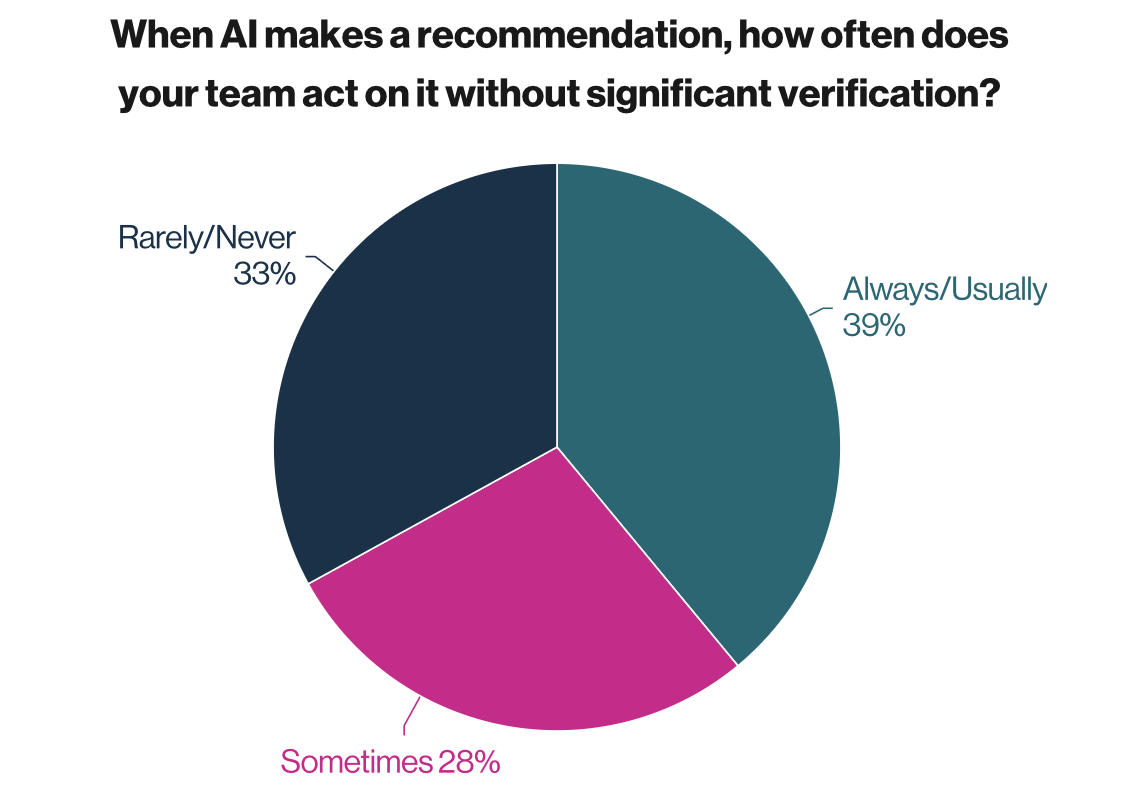
Last year, respondents told us trust was the most important factor in transformation. This year’s survey confirms what many of us live every day: Nearly 40% of health marketers act on AI recommendations without much checking, while a third rarely or never act on them without significant validation. Same tools, same industry, opposite instincts.
More than half now say advanced AI is deeply embedded in their organizations, up from about 40% last year. Marketers are using it to help steer billions of dollars in media, content and field spend. Yet only a little more than a quarter of respondents describe their data as clean, structured and readily accessible, and only one in five say their medical and legal teams are easily keeping up. We’re buying better models without investing in what they run on.
That’s a foundation problem, and trust starts there. AI performs best when it’s grounded in evidence, connected to audience data and informed by a structured knowledge graph of brand and market context that is consistent, current and continuously maintained.
AI’s real strength is range: It can explore more ideas, angles and scenarios in an afternoon than a team could in a month. But without evidence and data, it can’t really tell you which of those ideas are worth backing. Breakthrough marketing and creative solutions come from finding that balance.
AI is now an audience, too: It guides patients, physicians and payers at every step of the journey, from making sense of symptoms to diagnosis, referral and coverage. Half of respondents are working to show up in AI-generated answers, but showing up is only the start.
Every brand needs a context strategy, not just a content strategy. Building a multidisciplinary plan to ensure machines retrieve and process the right information the right way at the right time now means predicting what people ask AI across the entire journey. Diagnosing AI failure modes and designing context solutions is an art and a science. That’s where agency expertise, connected data and creative solutions can close the gap.
Trust in AI has to run both ways. Right now, half of respondents say their in-house team leads AI innovation, and technology vendors outrank agencies as trusted partners. Agencies need to earn that seat by making AI more reliable, transparent and humble, not just faster. Clients, in turn, need to give partners room to change how the work gets done and share the evidence and data that make AI reliable.
Picture where this is heading. Soon, every person at an agency will lead a team of AI agents. According to this year’s survey, almost 40% of respondents already run agents in full production. When one strategist can do the work of 10, the question won’t be whether AI can do the job. It’ll be whether the foundation under all those agents is worth trusting.
Three questions worth asking of any AI investment: What is it grounded in? Can we see why it made that call? Who is accountable when it’s wrong?
The industry has shown it can adopt AI. The next smart investment is trust. At Publicis Health, we believe that investment starts with grounding AI in contextualized evidence and connected data. That’s what turns AI spending into returns you can trust.
Original article published by MM+M online